
How Do I File Returns For Back Taxes?
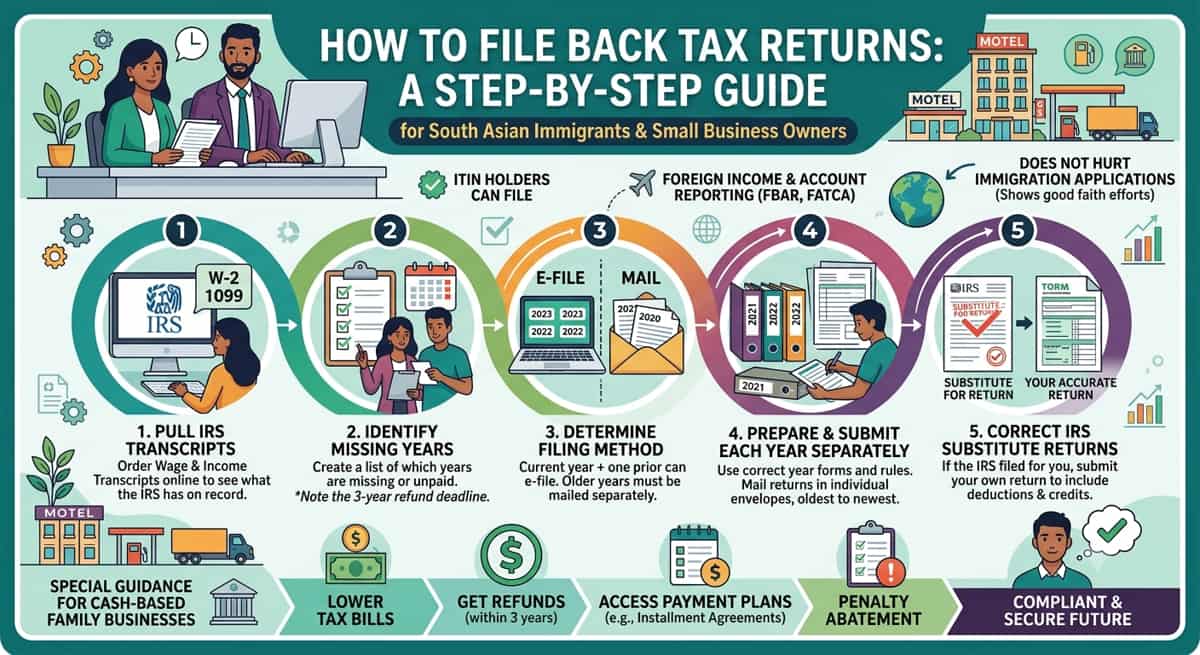
Filing back tax returns is no small task especially if you are behind on several years but the most important part of fixing your situation is actually taking steps to do something about it. Generally, the IRS will require taxpayers to file any past-due returns before they are eligible for payment plans, abatement or other tax resolution programs. The longer unfiled returns sit, the more likely penalties, interest, overdue refunds and enforcement actions become an issue. Well, for the most part, it is way less scary than most folks think it is when you take it one step at a time. Collecting income documentation, finding the correct forms to complete for each year and reporting deductions and credits correctly can help you submit fully documented and compliant returns.
Whether a sole proprietor or on your own for many reasons as a small business owner, the guidance provided here will help reduce stress with respect to back taxes and keeping you moving forward toward filing all of them properly.
What Counts as Back Taxes
"Back taxes" simply means any tax return you were supposed to file but didn't whether that's one missed year or several in a row. It also covers years where you filed but never paid what you owed. Either way, the return is overdue, and the balance (if any) has likely been growing with interest ever since.
If you're in this situation, you probably have a reason that makes complete sense once you say it out loud. Maybe you switched from an F-1 to OPT to an H-1B and weren't sure which forms applied to you that year. Maybe your family runs a motel, gas station, restaurant, or trucking business, and between managing employees, suppliers, and long hours, the paperwork got pushed to "next week" one too many times. Maybe you're an ITIN holder and no one ever clearly explained that you're still required to file even without a Social Security number. Or maybe, honestly, the whole idea of contacting the IRS felt scary especially if your immigration status isn't fully settled and you worried that reaching out would draw unwanted attention.
None of these reasons make you careless or in trouble in some permanent way. The IRS deals with unfiled returns constantly, and in the vast majority of cases, its goal is to get you caught up and compliant not to punish you. The sooner you start, the more options you have.
How to File Returns for Back Taxes: Step-by-Step Process
Step 1 — Pull Your IRS Wage and Income Transcripts
Before you can file anything, you need to know what the IRS already has on record for you. You can request a free Wage and Income Transcript through your online IRS account, by mail, or by calling the IRS directly. This document lists every W-2, 1099, and other income form that was reported to the IRS under your name and Social Security number or ITIN for a given year.
This step matters more than people realize, especially if you've lost old paperwork, changed jobs several times, or worked for a family business where records were kept informally. The transcript becomes your starting point it tells you what income the IRS is expecting to see reported, so you're not guessing or leaving something out by accident.
Step 2 — Identify Exactly Which Years You Need to File
Next, make a simple list: which years did you not file, and which years did you file but not fully pay? Go back as far as you can remember, then confirm it against your transcripts.
One important date to know: if the IRS owes you a refund for a particular year, you generally only have three years from that year's original filing deadline to claim it. After that, the refund is gone for good the IRS keeps it. This doesn't apply if you owe money instead of being owed a refund; in that case, there's no deadline that lets you off the hook, and the balance keeps collecting interest the longer it sits. Either way, the sooner you file, the more money you protect.
Step 3 — Know Which Years You Can E-File vs. Which You Must Mail
Here's something that surprises a lot of people: the IRS only allows electronic filing for the current tax year plus one year prior. If you're catching up on 2022, 2021, or earlier, you cannot e-file those returns through commercial tax software even though the software can still help you prepare them.
For older years, you'll need to download the correct prior-year tax forms from IRS, fill them out (by hand or with software that prints a paper copy), and mail each year's return separately to the IRS address for your state. It's a slower process than e-filing, but it's completely normal and works exactly as intended.
Step 4 — Prepare and Submit Each Year's Return Separately
Each tax year is its own standalone return, using that specific year's tax forms and tax rules not this year's. Mixing years together, or trying to combine multiple years' income onto one form, will only create confusion and delays. Prepare year one, mail or e-file it, then move to the next.
A practical tip: if you're mailing several years at once, put each return in its own envelope, and consider sending them by certified mail so you have proof of when the IRS received each one. File them in order from oldest to newest. The IRS processes each year individually, so there's no need to wait for one year to finish before sending the next.
Step 5 — Watch for and Correct an IRS Substitute for Return (SFR)
If you go too long without filing, the IRS may eventually file something on your behalf called a Substitute for Return, or SFR. This isn't a favor it's built using only the income the IRS already knows about (W-2s and 1099s), and it doesn't include any deductions, credits, or dependents you may be entitled to. That usually means a much higher tax bill than if you had filed yourself.
The fix is simple: file your own accurate return for that year, even after an SFR has already been created. Your return generally replaces the IRS's version and can significantly lower what you owe once your real deductions and credits are counted.
Special Filing Considerations for South Asian Immigrants and Small Business Owners
Filing Back Taxes with an ITIN or in a Mixed-Status Household
If you file taxes using an Individual Taxpayer Identification Number instead of a Social Security number, you're still required to file back taxes the same way anyone else is the process doesn't change. What does matter is keeping your ITIN active; if it hasn't been used on a tax return in a while, it may need to be renewed before your return can be processed.
Mixed-status households for example, a spouse with a green card and a spouse still on a visa, or U.S. citizen children with ITIN-holding parents are very common and completely manageable from a tax standpoint. You can still file jointly or claim dependents in most cases. This is an area where a professional familiar with immigrant households can save you real money, since some credits depend on exactly how your household's status is structured.
Cash-Based Family Businesses
Motels, gas stations, restaurants, trucking routes, grocery stores, and salons are the backbone of a lot of South Asian family businesses in the U.S. and they also tend to involve more cash income than a typical office job, which makes recordkeeping trickier and back taxes more common.
If you're catching up on business income, gather whatever you have: bank deposits, register tapes, supplier invoices, mileage logs, payroll records, anything that shows money in and money out. It doesn't need to be perfect. A tax professional experienced with small, cash-heavy businesses can help you reconstruct a reasonable, defensible picture of your income even from incomplete records which is far better than leaving the year unfiled entirely.
Foreign Income, Remittances, and Reporting Foreign Accounts
Sending money home to family, or keeping a bank account in India, Pakistan, Bangladesh, Sri Lanka, or Nepal, doesn't create a tax problem by itself remittances you send aren't taxed. But if you have foreign bank or investment accounts that together add up to more than certain thresholds during the year, you may have separate reporting requirements (commonly known as FBAR and FATCA reporting) in addition to your regular tax return. These are easy to miss because they feel unrelated to "taxes," but skipping them can carry their own penalties. If you have accounts back home, it's worth specifically asking a tax professional whether these apply to you.
What Happens If You Don't File — Penalties, Interest, and IRS Collection Steps
It helps to understand what's actually at stake, not to scare you, but so you can see why acting now is worth it. If you owe money and don't file, the IRS charges a Failure-to-File penalty of 5% of the unpaid tax for each month your return is late, up to a maximum of 25%. There's a separate Failure-to-Pay penalty of 0.5% per month on whatever balance remains unpaid, also capped at 25%. On top of both penalties, interest keeps compounding daily on the original tax owed and on the penalties themselves.
If the IRS sends a formal notice demanding payment and it goes unanswered, the next steps can include a federal tax lien against your property or a levy that allows the IRS to garnish wages or take funds directly from a bank account. None of this happens overnight, and it's avoidable at almost every stage simply by filing and communicating with the IRS. One useful thing to know: if you're actually owed a refund for a year, the IRS generally doesn't charge a penalty for filing that return late the only risk is losing the refund itself if you wait past the three-year window.
What Are My Options If I Owe Money I Can't Pay?
IRS Installment Agreements
If you can't pay your full balance right away, the IRS offers installment agreements. Many people qualify to set these up online once their returns are filed, and they let you pay off what you owe over time instead of all at once. Interest continues to accrue on the remaining balance, but it stops the more aggressive collection actions from moving forward.
Offer in Compromise
In some cases, if paying your full tax debt would create serious financial hardship, you may be able to settle for less than the total amount by Offer in Compromise. This isn't automatic or guaranteed the IRS looks closely at your income, expenses, and assets before accepting one but for the right situation, it can meaningfully reduce an overwhelming balance.
First-Time Penalty Abatement
For the first time falling behind and you've generally had a clean filing history for the past few years, you may qualify to have certain penalties removed through Penalty Abatement. It's worth asking about directly, either by phone or in writing, once your returns are filed and up to date.
Does Filing Back Taxes Affect My Green Card, Visa, or Citizenship Application?
This is often the real worry underneath everything else, so let's address it directly. USCIS does review tax compliance as part of green card (adjustment of status) applications and naturalization, partly as evidence of what immigration law calls "good moral character." Unfiled returns or a large unresolved tax balance can raise questions during that process.
The encouraging part is that this is very fixable, and fixing it proactively before an immigration interview, not after a problem comes up generally works in your favor. Submit your back taxes and, if needed, setting up a payment plan shows a good-faith effort to become compliant, which is exactly what these applications are looking for. Because tax filing and immigration status intersect here, this is a situation where it genuinely helps to have a tax professional and an immigration attorney aware of each other's work, rather than handling the two separately.
Common Mistakes South Asian Filers Make When Catching Up on Back Taxes
A few patterns come up again and again. People try to combine multiple years of income onto a single return instead of filing each year separately. They focus only on federal taxes and forget that many states require their own back-tax filings too. ITIN holders sometimes assume they aren't eligible for any refunds or credits, when in many cases they are. Business owners underreport cash income out of habit or worry, which usually creates more problems than it solves. And perhaps the most common mistake of all: waiting for the "right time" to deal with it, which often means years pass before anything gets filed. Filing one year at a time, starting now, beats waiting for a perfect moment that never quite arrives.
Should You File Back Taxes Yourself or Hire a Professional?
If your situation is simple one or two missing years, income only from a single job with a clear W-2, no business income, and no immigration complications filing it yourself with tax software is often manageable.
If you have several years to catch up on, business or cash income, foreign accounts, an active immigration case, or a tax bill large enough to worry you, it's worth paying for a CPA or Enrolled Agent who has specifically handled cases like yours. Tax professionals within South Asian communities understand both the language and the cultural context which can make a genuinely stressful process feel a lot less intimidating.
Bringing It All Together
Filing back taxes is rarely as complicated as it feels before you start. Pull your records, figure out which years are missing, file each one separately using the right method for that year, and then work out a payment plan for whatever you owe. Every year you catch up on is one less thing weighing on you financially, and often emotionally too. If your situation involves a business, an ITIN, foreign accounts, or an active immigration case, it's worth sitting down with a professional who can look at your full picture and help you file with confidence.
Ready to Get Started?
Get a free consultation with a certified debt consultant to see if debt settlement is right for you.
Get Free ConsultationAbout the Author
Bhupinder Bajwa
.
Related Articles
What Is The Difference Between Criminal Tax Penalties And Civil Tax Penalties?
11 min read
Tax Evasion Vs Tax Fraud And The Statute Of Limitations
9 min read
What Is An IRS Substitute For Return(SFR)?
12 min read
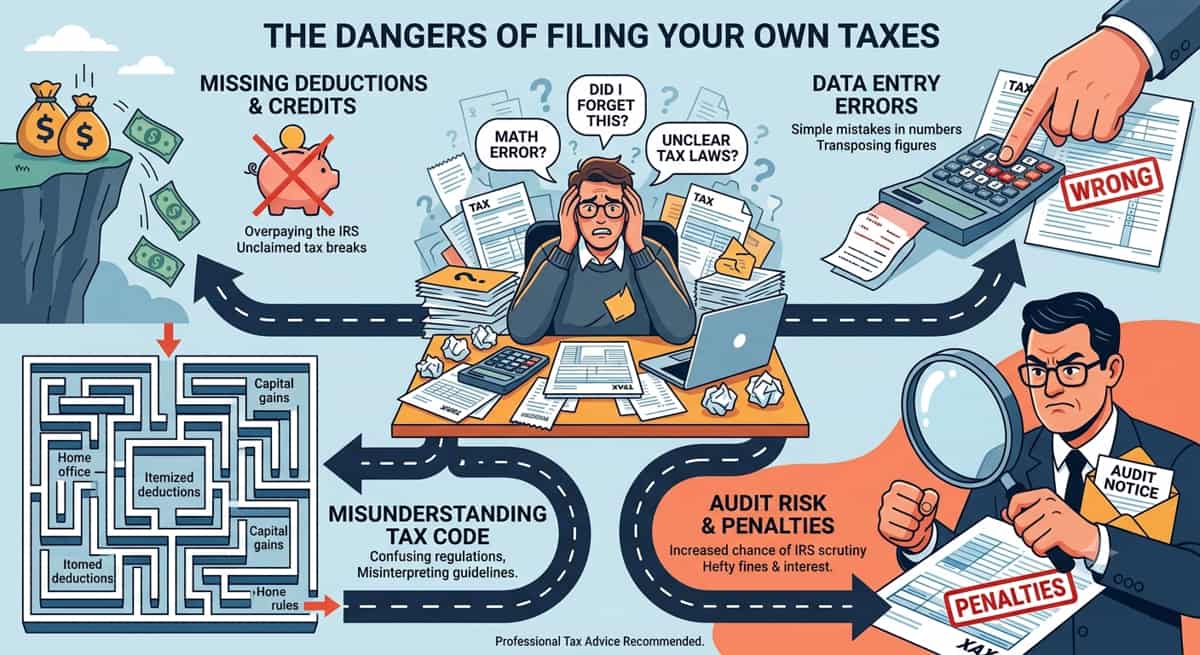
What Are The Dangers Of Filing Your Own Taxes?
11 min read
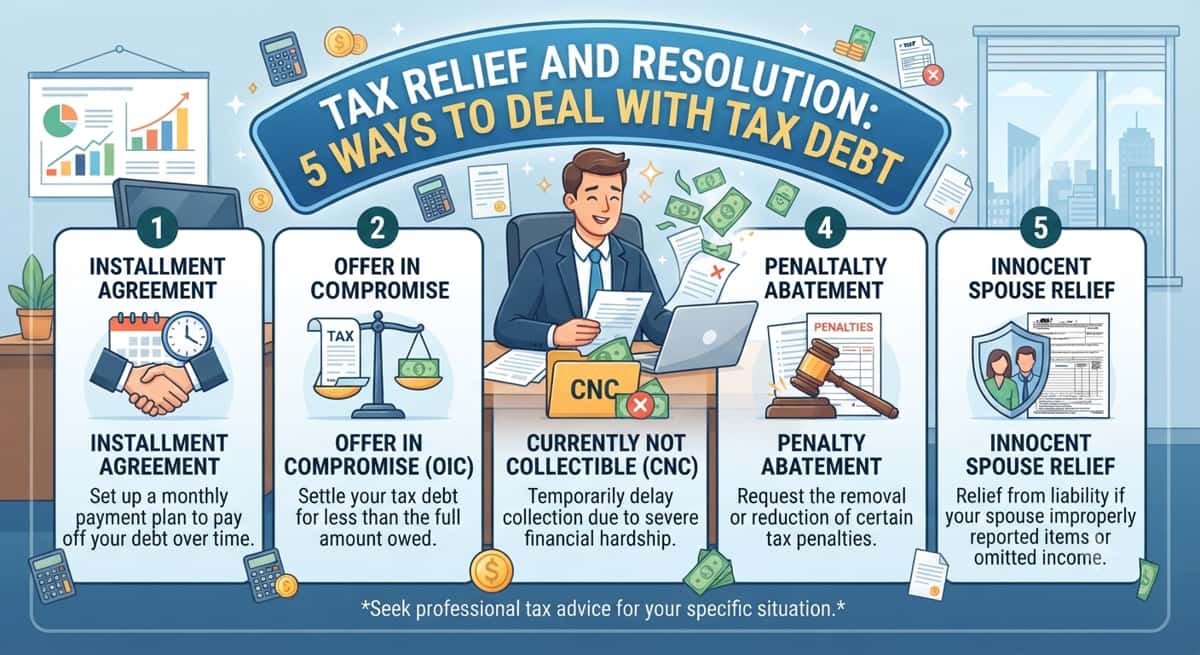
Tax Relief And Resolution: 5 Ways To Deal With Tax Debt
11 min read

State Tax Debt: What You Need To Know
12 min read
Get Your Free Consultation
Speak with a certified debt consultant to explore your options.
Start NowNo obligation • Free consultation