Financial Tips, Guides & Insights Blog
Page 3 of 31

Filing For Business Bankruptcy? You Need To Know This First
Filing for business bankruptcy is a legal reset, not a moral failure. Depending on your business structure, options like Chapter 7 (liquidation) or Subchapter V (small business reorganization) can wipe out or restructure debt. Prioritize reviewing personal guarantees, consult both bankruptcy and immigration attorneys, and avoid hiding assets before filing.

Does Debt Affect Your Credit Score?
For South Asian immigrants, avoiding debt in the U.S. hinders financial growth. A strong credit score requires understanding that debt isn’t inherently bad; strategic management is key. To build credit from zero, prioritize on-time payments, keep credit utilization below 30%, and use tools like autopay to secure your family's future.

Is Bankruptcy Discharge Public Record?
For South Asian immigrants in the U.S., financial struggles carry deep cultural stigma, making bankruptcy intimidating. However, it is a legal fresh start, not a public embarrassment. Filed in federal courts (PACER), records require fees and specific details to access meaning neighbors and relatives back home won't easily stumble upon them.

State Tax Debt: What You Need To Know
State tax debt is separate from federal IRS debt and is handled by individual state agencies with unique rules. While it does not directly impact your U.S. immigration status, ignoring it can lead to liens, wage garnishments, or frozen bank accounts. Resolving it quickly through payment plans or professional help protects your financial health.

Debt Settlement- The Best Way To Avoid A Lawsuit
For South Asian professionals in the U.S., debt settlement can resolve credit issues privately without affecting immigration status. However, pausing payments to save for a lump sum increases lawsuit risks. To protect your future, act early, consider low-risk nonprofit credit counseling, and always respond to court summonses to prevent default judgments.

Unpaid IRS Taxes: What You Should Know
Owing the IRS money is a common, fixable civil issue—not a crime. If you cannot pay in full, file your return anyway to avoid steep failure-to-file penalties. The IRS offers manageable solutions like monthly payment plans, temporary hardship pauses, or debt settlements. The most important step is to respond promptly, not hide.
How To Get The IRS To Accept An Offer In Compromise?
An IRS Offer in Compromise (OIC) lets eligible taxpayers legally settle tax debt for less than they owe based on financial hardship. Beware of predatory relief scams. To succeed, applicants must accurately calculate their collection potential, file all returns, and maintain strict tax compliance for five years after its acceptance.

Things To Keep In Mind If You are Looking To Consolidate Debt
Debt consolidation combines multiple debts into one lower-interest payment. For South Asian immigrants managing cross-border expenses like remittances, choosing between loans or balance transfer cards requires calculating true monthly costs beyond US credit reports. When handled carefully, consolidation streamlines finances, protects credit scores, and secures your long-term financial future.
Veteran Debt Relief | Effective Military Debt Solutions
Veteran debt relief provides tailored programs and legal protections, like SCRA interest caps and MLA lending limits, to help military families manage debt from service transitions. It addresses unique cultural stigmas and family financial obligations for South Asian veterans, offering solutions ranging from free counseling to structured debt repayment plans.
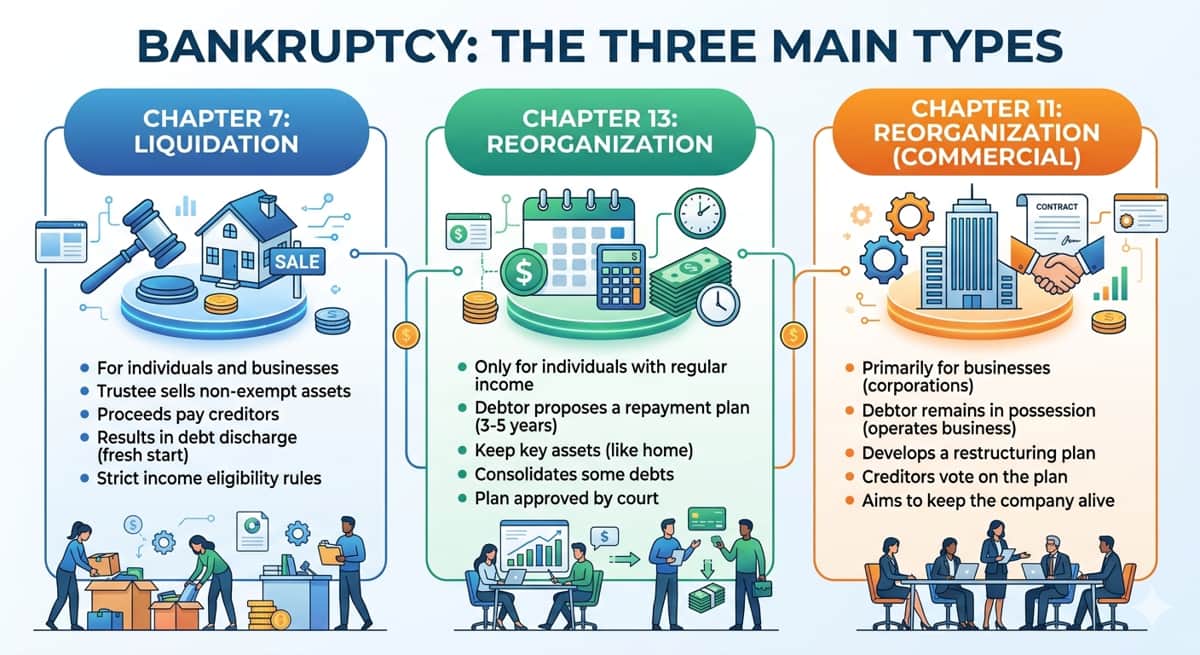
Bankruptcy: What Are The Three Main Types?
The three main types of U.S. bankruptcy offer distinct financial lifelines: Chapter 7 rapidly liquidates non-exempt assets to wipe out debt, Chapter 13 protects property via a 3-to-5-year repayment plan, and Chapter 11 reorganizes struggling businesses. This private legal process provides an honorable, structured path toward a fresh financial start.